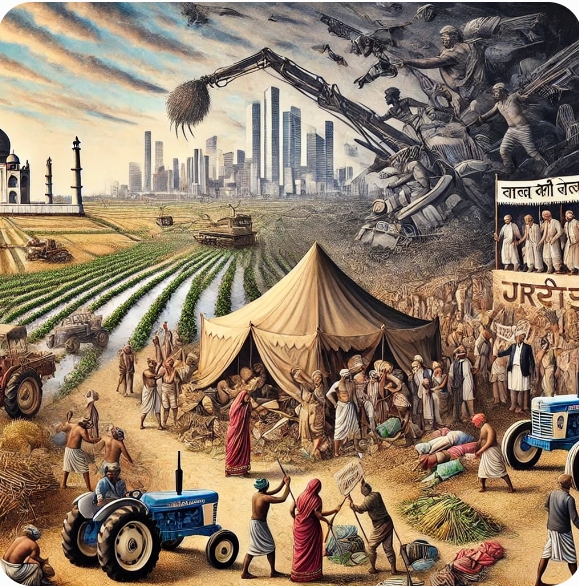
Farmers’ protests have evolved into an annual ritual that serves as a festival for groups that benefit from the perpetuation of these events. Originally driven by specific demands, most of which the government has already addressed, these protests have now lost their meaning. What began as a platform for voicing agricultural concerns has morphed into a sustained effort by vested interest groups to keep these demonstrations alive, despite their irrelevance.
The Limited Support of the Protests
Even at the peak of Farm Law protest when the government brought these laws in parliament with a firm intent to convert them in to Law of the land, these protests had limited geographic and demographic support. They were confined to a 200-kilometer radius around Delhi and neighboring states, primarily Punjab. The rest of the nation, understanding the necessity of these reforms, has remained indifferent to the protest and supportive of the farm laws. These laws were introduced to revitalize the rural economy and attract investment, both of which are critical for modernizing India’s agricultural sector.
The stark contrast between the views of the protesting farmers and the larger rural population underscores the limited appeal of these demonstrations. They have become less about genuine grievances and more about political theater staged by a few fringe groups.
Electoral Defeat of Protest Leaders
The lack of popular support for these protests is evident from the electoral defeats of their leaders. Over the past three years, politicians who were prominent in opposing the farm laws have faced decisive losses. This demonstrates that their rhetoric does not resonate with the majority of Indians, further invalidating the protests as a reflection of national sentiment.
Despite these electoral setbacks, these groups persist, attempting to create unrest and gain minor political mileage. However, their influence remains confined to a narrow band of activists, primarily in Punjab. The rest of India has moved on, embracing the need for structural reforms in agriculture.
External Influence and Anti-National Links
A more troubling aspect of these protests is the alleged support they receive from external extremist groups. Reports have linked some protest leaders to organizations based in Canada that support anti-national Khalistani elements. These connections not only undermine the credibility of the protests but also pose a threat to India’s sovereignty and internal security.
It is imperative that the government conducts a thorough investigation into these linkages and holds these leaders accountable for any anti-national activities. Failing to address this issue decisively risks emboldening such groups and further destabilizing the region.
Time for Bold Reforms
The government must not allow itself to be intimidated by these fringe elements. Instead, it should seize this opportunity to reintroduce comprehensive farm laws that were previously rolled back. India’s rural economy is the next frontier for economic reforms. Structural imbalances between rural and urban sectors must be addressed to achieve the growth trajectory the country envisions for the coming decades.
The farmers’ protests, in their current form, serve no constructive purpose. They are a distraction from the urgent task of transforming India’s agricultural economy. By addressing these issues with courage and vision, the government can chart a path toward a more prosperous and equitable future for all Indians.



 VarnanLive
Leave a Reply